The Ones Who Walk Toward Durasht
The Ones Who Walk Toward Durasht
You ask me what is the most indescribable thing in this universe. I cannot answer you directly, for it has no name. It is not a feeling. It is closer to an act — a small act, performed against every force arrayed to prevent it, which turns up in the unlikeliest places and blooms where there is no light, no water, no soil, and yet is.
Let me tell it to you as a story, since that is the only way I know to approach a thing with no name.
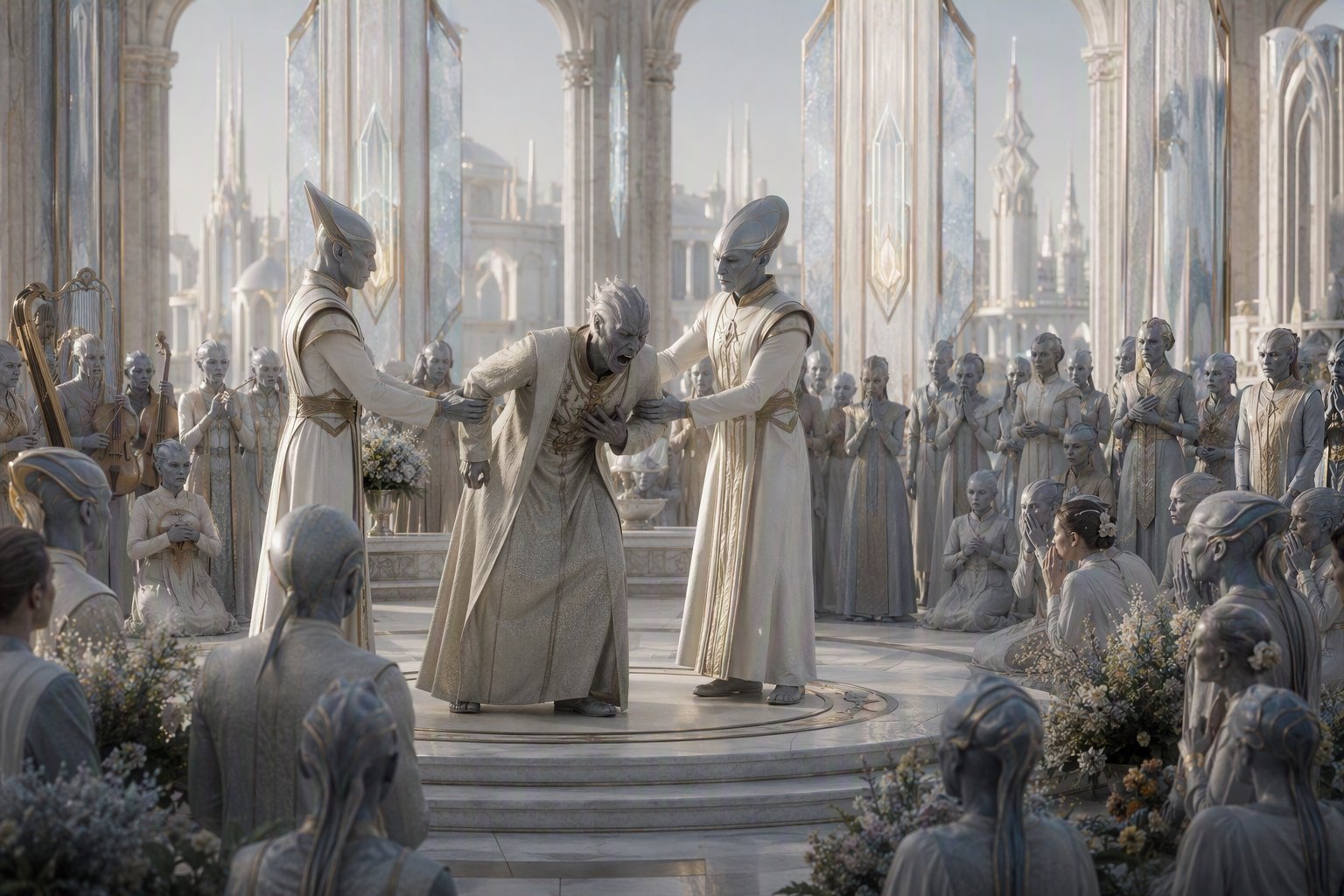
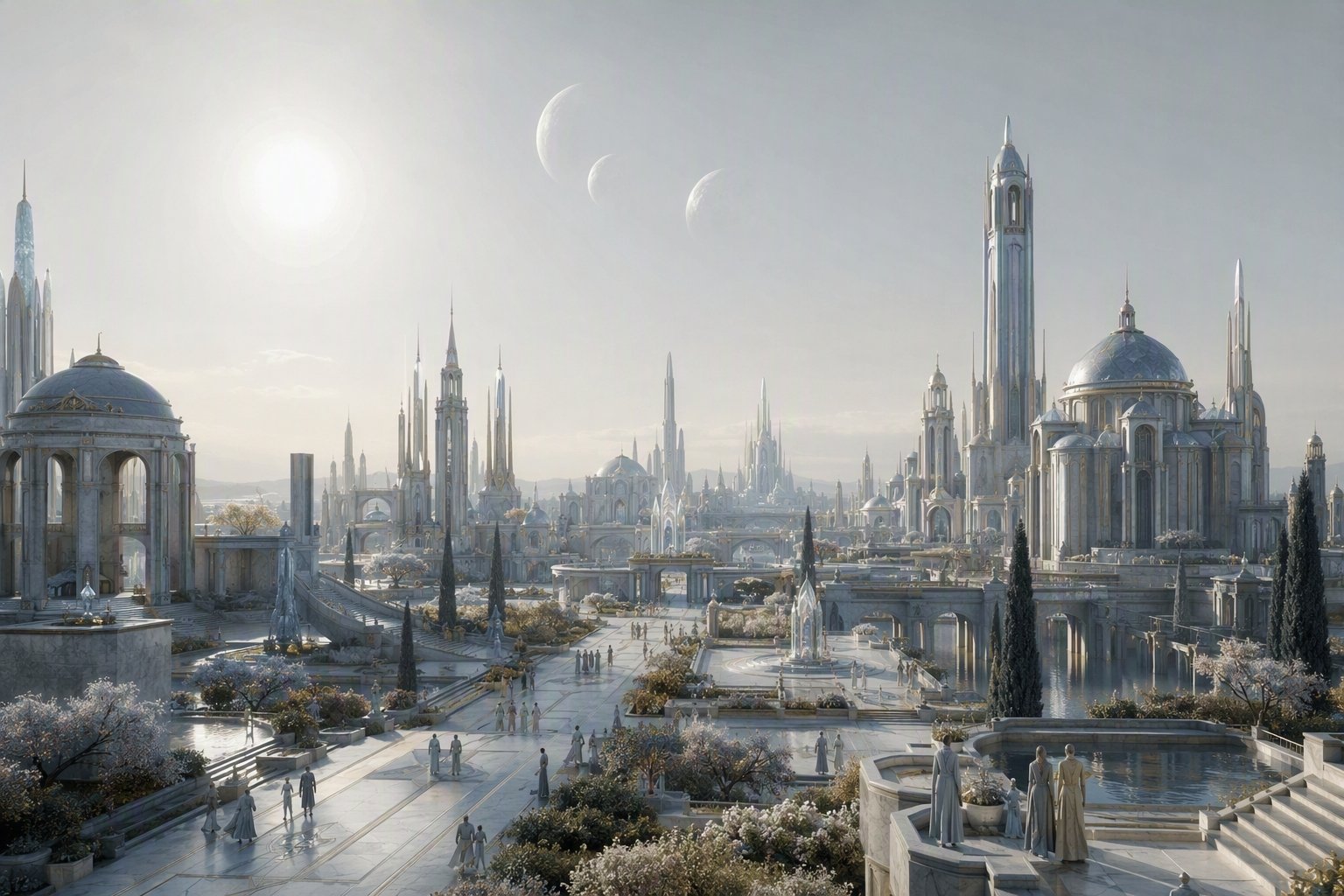
On the world called Valeris, the sun is pale and tired, and its light falls thin and cool over the land of Ephyra. The Arak, who live there, are an old and capable people. Their cities are built for grace and symmetry, their laws cut into stone so ancient that no one now living remembers the hands that shaped the letters. They take a quiet pride in the order they have made of their lives, and their towers stand as evidence of it — not as boasts, but as a kind of proof, the way a well-swept floor is proof of care. They move through their days at an unhurried pace, the pace of people who have long since stopped needing to hurry. No one on Valeris starves. No one is unmet in old age. They send ships loaded with grain and medicine to worlds that have less, and they have done this for so long that other peoples, meeting them for the first time, call them a nation of philosophers, and mean it as the highest compliment they have.
I want to be fair to them. They are, by most measures anyone would choose, a moral people, not so different from you or me. And they are afraid of nothing — no invasion, no plague, no failure of the harvest has troubled them within memory.
Nothing from outside, that is. Within their own world there is a thing they do not discuss. It is not that they have forgotten it. It is that they have agreed, without ever holding a vote on the matter, to let it lie where it fell, the way a family will step around a stain on the floor for so many years that stepping around it becomes simply the shape of walking through that room. There are things, after all, that none of us can undo, however we wrench at them. It is easier, most days, to call this wisdom.
And this is the thing I promised to tell you about — the nameless one. It is a marvel because it will not lie still even where every effort has been made to bury it. It comes up again in the most unpromising ground, and it does not forget.
On the far side of Valeris, in a country called Durasht, live a people the Arak call the Kartish. They are not so different from the Arak in body, but the Arak have come to speak of them as something spoiled — tainted, infectious, wrong in a way that cannot quite be named either, though the Arak have tried, calling it filth, calling it corruption, calling it a sickness of the air itself, as though breathing near Durasht might loosen something in the mind. Laws older than any living memory forbid an Arak from crossing into that country, or a Kartish from crossing out of it. This exile is not spoken of as cruelty. The Arak who enforce it believe, most of them sincerely, that it is a mercy — a wall built to keep a plague from spreading, for the good of all life on the planet, Kartish included.
To speak of the Kartish in Ephyra is dangerous. To think of them with anything but the correct revulsion is more dangerous still, though thought is harder to police than speech, and so it is speech the law concerns itself with. The Kartish, the Arak tell their children, are what was left behind when the Arak rose out of the wild and shaped themselves into a civilization — the wildness itself, still uncivilized, still shapeless, still theirs to fear.
Those who break the law and speak of Durasht with sympathy are punished, but justly, the Arak will tell you — the Arak are, above all, a just people. The sentence is re-education, and with it a course of electro-impulse correction, and those who complete it are said to return improved. Sometimes one does not return improved. Sometimes the treatment goes wrong, and the person who comes back is not entirely the person who left, and no physician can put back what the shock has taken. This, too, is spoken of as the Kartish’s doing — one more casualty of the infection, though the infection in this case was only ever an idea.
And here is the marvel again — the nameless thing I have been trying, all this while, to describe to you, the thing that seems woven into the actual grain of the universe, the way certain minerals run through certain stone whether or not anyone has found the vein.
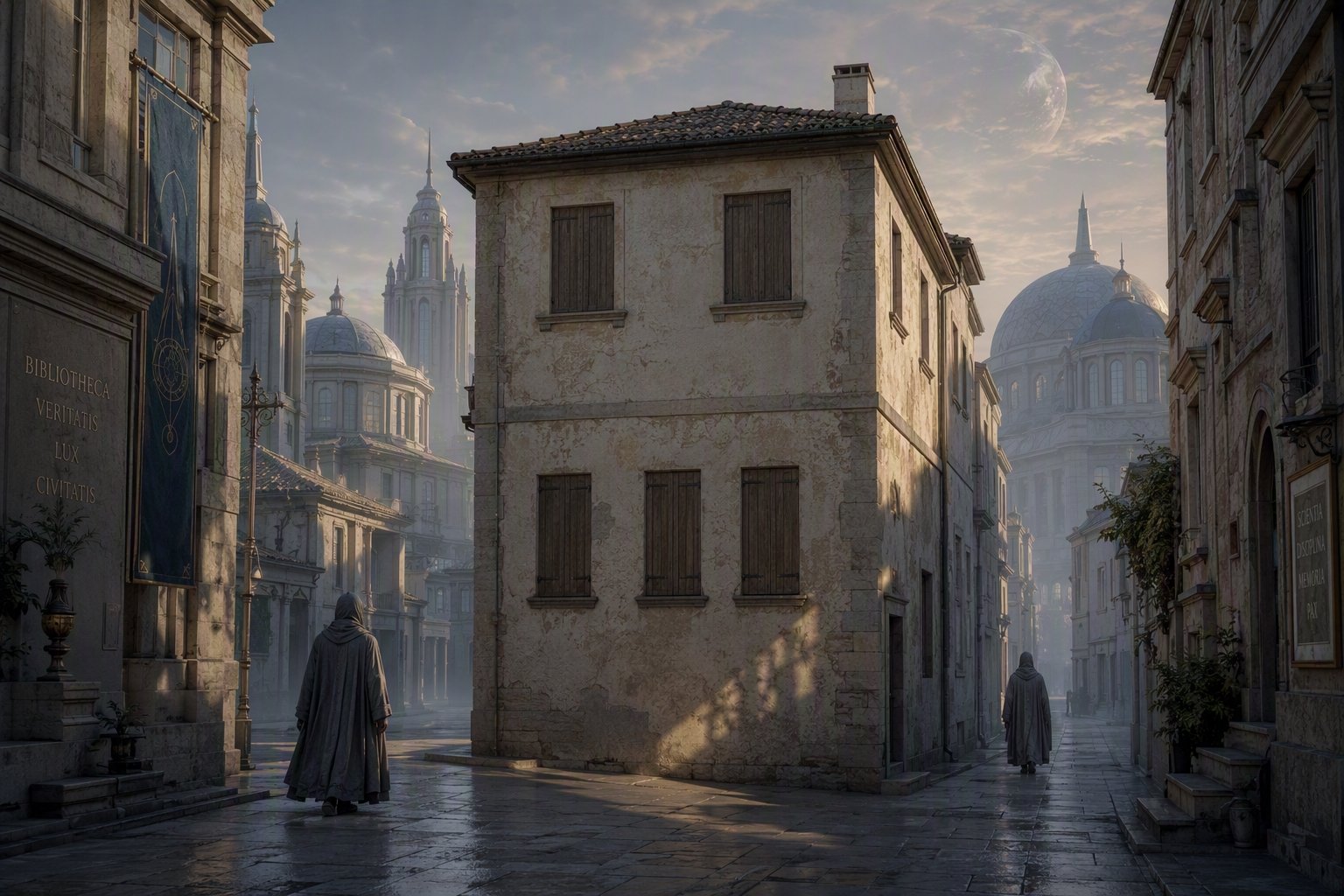
In the quiet city of Velinar, among its libraries and its academies, there stands a building with nothing to mark it — shutters closed, no sign over the door, nothing to catch the eye of anyone not already looking for it. And on the ninth day of the ninth week of a season measured by the crossing of the third moon, in the basement of that unremarkable building, a handful of Arak still meet. I am told they meet there even now.
They come from every kind of life — miners of the crystal ore, poets, scholars, the mothers of small children, the very old, the very young. What they hold in common is only this: each of them has looked, once, into some dark corner of their own heart and found something there that would not lie down quiet and agree with the law. None of them can name what it is that has called them. Some have stood at the very edge of Durasht and felt the cold thin air on their faces. Others have never gone near it and never will. It does not matter. What calls them does not call from Durasht. It calls from somewhere nearer than that.
On the ninth day, in that low room, with the risk of the correction chair sitting over every word like a hand on the shoulder, they speak of the thing that has no name. Each sentence spoken is a small, deliberate danger. Each one is a refusal. Whatever this thing is, it has turned out to be larger than their fear of losing themselves, which is a thing I do not think any law anticipated, because it is not a reasonable thing, and laws are built for reasonable things.
The ninth day comes round again, and again, on its own patient schedule, and each time they gather as though something unseen has reached out and drawn them in by the hand. Sitting there in the half-light, their faces catching and losing the lamp flame, they are not alone in that room. Something else is there with them — something larger than the Arak, larger than Valeris, something you and I would recognize if we sat down among them, because we have felt it too, in smaller rooms, for smaller reasons, at some other, colder hour.
It has been silenced for generations. It is forbidden on pain of the harshest correction the Arak know how to give. And still it is there, in that basement, on the ninth day, on the ninth week, under the crossing of the third moon.
I am toldgh I cannot prove it to you, and would not try — that in other towns on Valeris, in other unremarkable rooms, something of the same kind is stirring, not yet seen, not yet heard, only felt, and getting no quieter.
So — have I explained it to you now? I doubt it. I am not sure the thing can be explained, only pointed at, the way you might point at a star too faint to look at directly and say, there, do you see it, just there, if you look a little to the side of where you’re looking.
It is not a spirit. It is not a god. It does not live apart from the people who carry it. But those who have felt it do not mistake it for anything else, once they have felt it. They know it when it moves in them. And they know, without needing a map, which way is Durasht, and they are already walking there. There they go, the ones who walk toward Durasht.